EMR vs Paper Records — What Rwandan Clinics Gain by Switching
Paper files feel safe. They are familiar, they need no training, and they seem free. But the true cost of paper shows up in ways that are easy to miss — lost files, duplicated tests, slow billing, and no way to see what is happening across the clinic. This is an honest comparison to help you decide.
Where paper quietly costs you
- Only one person can hold a file at a time. While a record is with the doctor, reception and the lab are blind to it.
- Files get lost or damaged. Every lost file is a patient history gone, and often a repeated test.
- Billing is slow and error-prone. Copying services onto invoices by hand introduces the mistakes that get insurance claims rejected.
- You cannot see the whole clinic. Paper gives no easy way to know today's patient volume, revenue, or outstanding claims.
- Reporting is painful. Pulling numbers for management or the Ministry of Health means counting by hand.
What electronic records change
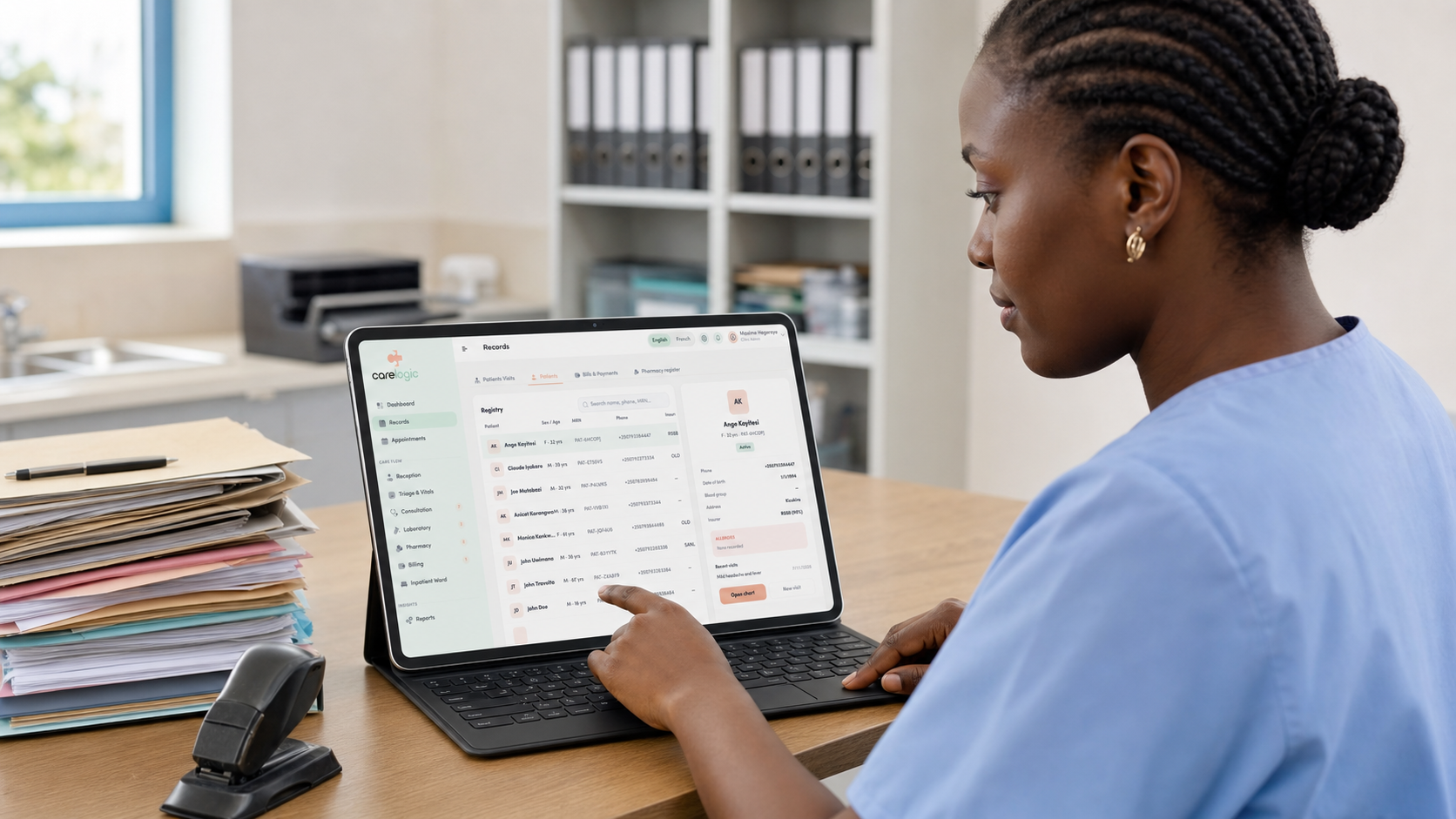
An electronic medical record keeps one record per patient that the whole team can use at once:
- The full patient history — every visit, diagnosis, prescription, and lab result — is available in seconds, from any desk.
- Records cannot be lost or misfiled, and access is controlled by role so sensitive data stays protected.
- Billing and insurance claims can be built directly from the record, cutting errors and rejections.
- Management sees patient volume, revenue, and clinical activity without counting anything by hand.
Is it secure?
A common and fair concern. Done properly, electronic records are more secure than paper: data is encrypted, access is limited by role, and there is no physical file to be lost, copied, or read by the wrong person. The question to ask a vendor is not whether data is in the cloud, but how it is encrypted and who can access it.
What about the switch?
The transition is the part clinics worry about most. Two things make it smooth:
- A web-based system with nothing to install, so there are no servers to buy or maintain.
- Migration support from the vendor to bring your existing records across, plus onboarding so staff are comfortable quickly.
You do not have to digitize everything overnight. Many clinics start with new patients and active files, then bring across the rest over time.
The honest verdict
Paper is not free — it costs you in lost files, repeated tests, rejected claims, and invisibility into your own operations. Electronic records turn those costs into visibility and speed. For most Rwandan clinics, the question is not whether to switch, but how to switch safely.
CareLogic is a web-based platform built for Rwandan clinics, with migration and onboarding support included on the Hospital Suite plan. Read our buying guide for what to look for, or book a demo.